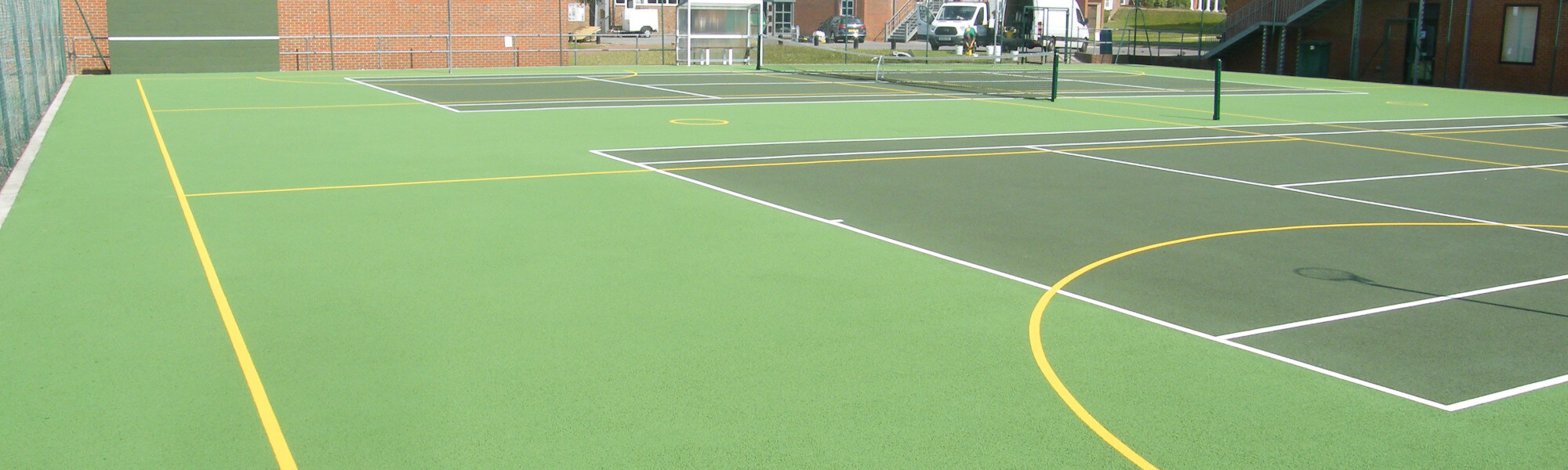

What Affects Tennis Court Construction Costs?

Tennis court construction costs can vary considerably from one project to another.

That is because the final price is determined by much more than the size of the court or the surface you choose. Ground conditions, existing levels, excavation, drainage, access for machinery, fencing, floodlighting and the overall specification can all affect the amount of work required.

Two finished courts may look very similar but have involved very different construction work underneath and around them.

For more than 40 years, Sovereign Sports has constructed courts for private homes, schools, clubs and councils. We provide no-obligation site visits so that we can assess the proposed location, understand how the court will be used and identify the work involved before providing a quotation.

If you are trying to establish a realistic budget, these are the factors that can make the biggest difference.

 1. What is the proposed site actually like?

The first question is not which surface you want. It is what we are starting with.

A relatively clear and accessible piece of land may require much less preparation than a site containing heavy vegetation, existing structures, unsuitable material or other obstacles.

The ground also needs to be suitable for creating a stable court construction. The finished playing surface is only the uppermost part of the facility. Much of the important work happens before that surface is installed.

This is why a contractor needs to consider the entire site rather than simply calculate a price from the dimensions of the proposed court.

If you are at the early planning stage, our tennis court construction service explains more about how Sovereign Sports approaches new court projects.

 2. Levels, excavation and ground preparation

Existing levels can have a significant impact on tennis court construction costs.

A court needs carefully controlled levels, so a sloping or uneven site can require more extensive groundwork before construction begins.


Depending on the site, this can include excavation, moving material around the property, removing surplus material and bringing in additional construction materials.

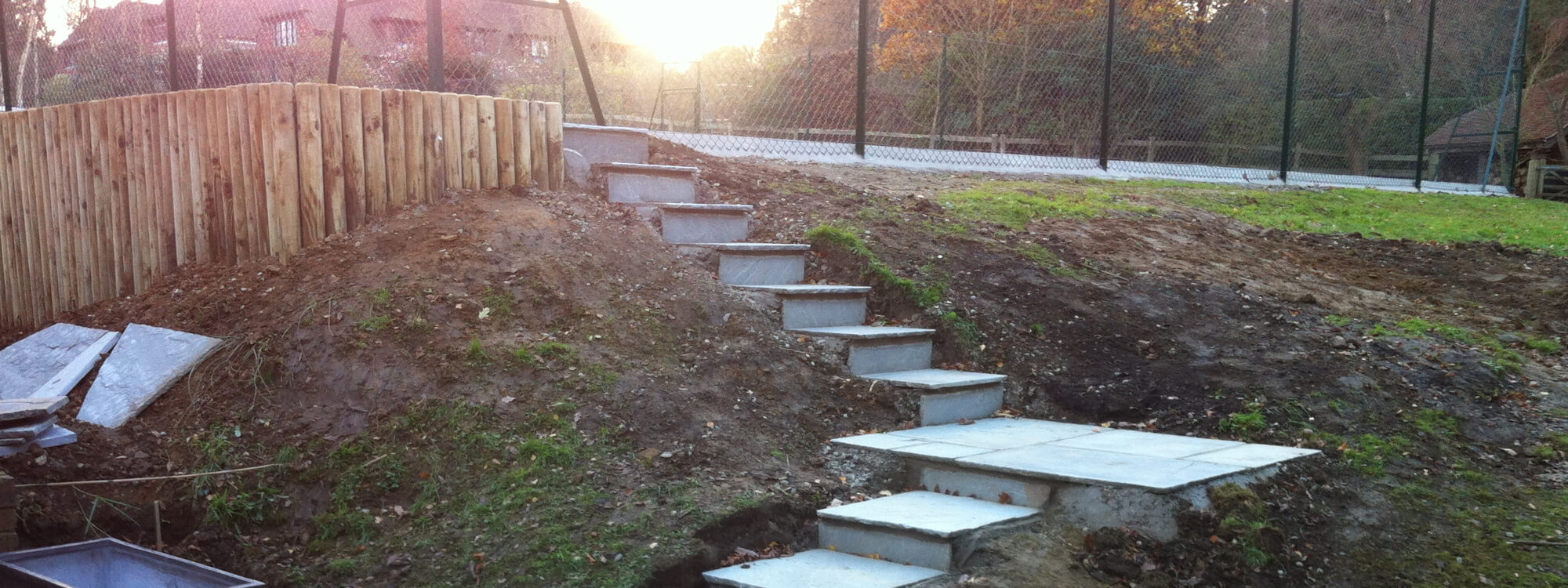
Where there are substantial changes in level, additional works may also be needed around the court.

This is one of the reasons generic online cost estimates have their limits. A photograph or simple measurement will not always reveal how much work is required to create the correct formation.

It also explains why two contractors may produce different quotations if they have allowed for different amounts of preparation or different construction specifications.

The important comparison is not simply how much excavation has been priced. It is whether the proposed groundwork is appropriate for the site and the finished court.

 3. How easy is access for machinery and materials?

Access is easy to underestimate when planning a private tennis court.

Court construction involves machinery, construction materials and, in many cases, the removal of excavated material.

A site with straightforward access from the road is very different from a court proposed at the bottom of a large garden with a narrow gateway or restricted route.

Difficult access does not necessarily prevent construction, but it can affect how the work has to be carried out.

Smaller machinery may be required. Materials may need additional handling. Deliveries and removal of spoil can become more complicated.

All of this can affect the time and work involved.

If you are deciding between different possible positions for a court, it is therefore worth considering how the construction team will reach the site, not just where the finished court will look best.

 4. What drainage will the court require?

Drainage is a fundamental part of outdoor court construction.

The appropriate solution depends on the individual site, ground conditions, levels and overall court specification.

For anyone comparing tennis court quotations, it is worth checking exactly what drainage work has been included.

A lower quotation may not necessarily represent the same scope of work. One contractor may have allowed for a different drainage specification, or for work another quotation has excluded.

This is a recurring theme when comparing court costs. The parts of the facility that are least visible when the project is finished can be some of the most important.

Proper preparation, construction and drainage all contribute to how successfully the court performs over time.

 5. Which tennis court surface should you choose?

Surface choice is one of the more visible factors affecting cost, but price should not be the only consideration.

Different tennis court surfaces have different playing characteristics, maintenance requirements and suitability for particular types of use.

Sovereign Sports installs a range of tennis court surfaces for private courts, clubs, schools and other sports facilities.

The right choice depends on how the court will actually be used.

A homeowner may prioritise appearance, playing characteristics and manageable maintenance. A school may need a robust surface suitable for frequent use or multiple sports. A tennis club may have different expectations around performance and member use.

The most suitable surface is therefore the one that matches the requirements of the facility, rather than automatically the cheapest or most expensive option.

When comparing quotations, make sure the exact surface system is clear. Two contractors describing a proposal simply as a “tennis court surface” may not be allowing for the same specification.

 6. Court dimensions and overall specification

The overall size and intended use of the facility will also influence the quotation.

The marked tennis court is only part of the required area. Appropriate run-back and side spaces need to be considered, along with fencing, access and any surrounding works.

Requirements may differ between a domestic court and facilities being created for a school, club or public setting.

If several contractors are pricing a project, check that each quotation relates to the same overall dimensions and intended use.

A price difference is much less meaningful if the contractors are actually proposing different facilities.

 7. What fencing is included?

Fencing should also be compared on specification rather than simply on whether it appears on the quotation.

Sovereign Sports provides tennis court fencing with different heights, gates and configurations available depending on the facility.

The appropriate solution can depend on the intended sport, surrounding environment, level of use and access requirements.

A private garden court may have very different priorities from a busy school or club facility.

When reviewing a quotation, check the fencing height, type and number of gates rather than relying on a single line saying that fencing is included.

 8. Will the court have floodlighting?

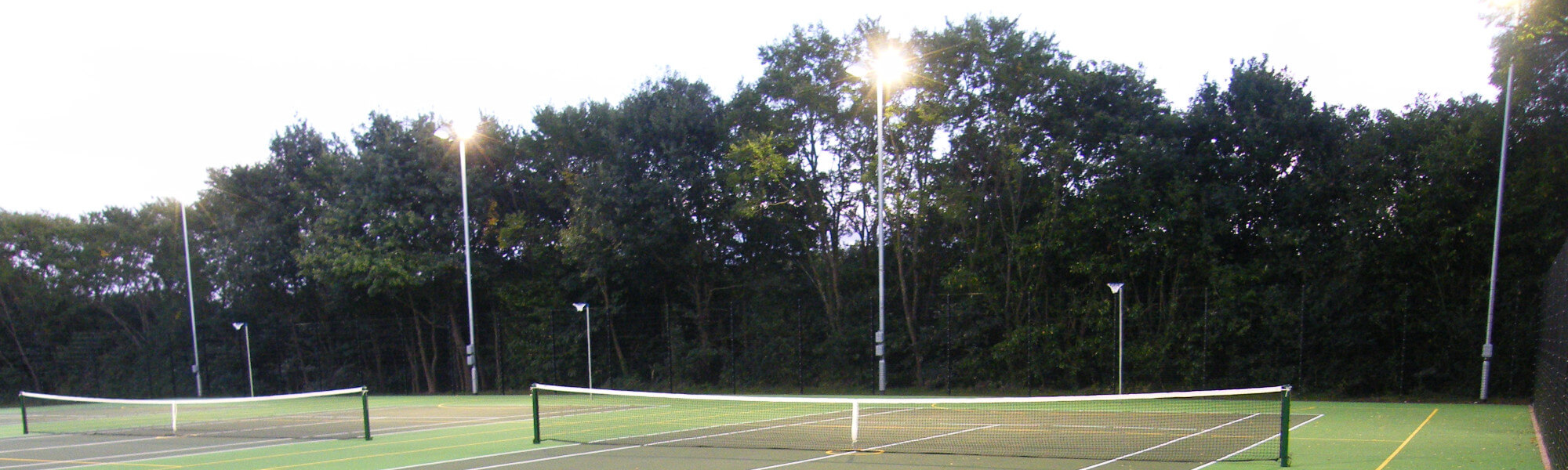
Floodlighting can significantly extend the usable hours of a tennis court, particularly through autumn and winter.

It also adds another part to the construction specification.

Depending on the system, installation can involve columns, luminaires, cabling, electrical connections and associated groundwork.

Sovereign Sports installs both static and retractable tennis court floodlighting, so lighting can be considered as part of the wider project.

Planning requirements should also be considered where relevant, particularly for installations involving floodlight columns. The exact requirements will depend on the site and proposed specification.

Even if you are considering adding floodlighting at a later date, it is worth discussing those plans during the initial construction stage. Future requirements may affect decisions made while the main court is being built.

 9. Are there additional works around the court?

The wider project can sometimes involve more than the playing facility itself.

Depending on the site, work may also include retaining walls, paths, landscaping or other associated construction.

For a private home, the objective may be to integrate the finished court successfully into the surrounding garden.

A school, club or council facility may have different practical requirements around access and the areas surrounding the court.

These elements should be identified early wherever possible, because they affect the real project scope.

This is another reason why a headline cost for “a tennis court” does not always provide a useful comparison.

 Why can two tennis court quotations be so different?

If you receive two or three quotations with noticeably different totals, the most useful question is not immediately, “Why is one contractor more expensive?”

First ask whether they are quoting for the same thing.

One proposal may include more excavation, removal of surplus material, a different drainage solution, a higher fencing specification or additional associated works.

Another may exclude some of those elements or leave them to be agreed and priced later.

The headline total only becomes meaningful once you understand what is included behind it.

A detailed quotation should therefore make the specification clear enough for you to compare contractors on a like-for-like basis.

 A tennis court quotation checklist

Before choosing between quotations, check the following:

  • Site preparation: What clearance, excavation and preparation work is included?
  • Levels: Has the existing slope and condition of the site been properly considered?
  • Excavated material: Does the quotation include removal from site where required?
  • Access: Have restrictions affecting machinery and deliveries been allowed for?
  • Court dimensions: Are all contractors pricing the same overall area?
  • Construction: What is proposed underneath the finished playing surface?
  • Drainage: What drainage provision is included?
  • Playing surface: Is the exact surface system identified?
  • Fencing: What type, height and number of gates are included?
  • Floodlighting: If required, what lighting and installation work is included?
  • Court equipment: Are posts, net fittings and associated equipment included?
  • Finishing: Are line marking and final surfacing included within the price?
  • Additional works: Are paths, landscaping, retaining works or other items required?
  • VAT: Is it clear whether VAT is included?
  • Guarantee: What guarantee applies to the completed installation?
  • Exclusions: What will still need to be organised or paid for separately?

This exercise is more useful than simply placing three final prices next to one another.

If something is unclear, ask the contractor to explain it before making a decision.

Why does a site visit give you a more useful quotation?

A site visit turns a broad discussion about tennis court prices into an assessment of your actual project.

It allows the contractor to look at access, existing ground conditions and levels, discuss how you intend to use the court and identify any factors that may affect construction.

It can also highlight choices that are difficult to make from a price list alone.

A different position on the property may prove more practical. One playing surface may suit your requirements better than another. Additional work may be easier to incorporate during the main construction rather than adding it later.

At Sovereign Sports, we offer a no-obligation site visit so that these factors can be considered before a detailed quotation is prepared.

Our courts are constructed in accordance with relevant SAPCA and Lawn Tennis Association standards, giving customers a clear specification behind the finished facility.

 So, what determines the cost of building a tennis court?

There is no single tennis court construction cost that will be accurate for every project.

The most reliable budget comes from understanding both the site and the specification.

Ground conditions, levels, excavation, drainage and access influence what is required to construct the facility. Surface choice, fencing, floodlighting and associated works then determine what the finished court will include.

That is why two tennis courts of similar size can legitimately have different prices.

If you are considering a new court for a private home, school, club or other sports facility, contact Sovereign Sports to discuss your plans and arrange a no-obligation site visit and quotation.
The Best Gizmos & Gadgets To Add To Your Tennis Court

If you have recently had a tennis court constructed at your home, business or property and are now looking for new ways to get the best out of it, we’re here to help.

From automatic ball machines to the right clothing, there are a number of high-tech gadgets and accessories you can easily add to your court to significantly help improve your performance.

Whether you’re practicing by yourself or with a partner, if you’re looking to improve the timing of your swing, your volleying ability, or the pace of your serve, investing in a few on-court extras could be a great idea.

With this in mind, join us as we run through some of the best gadgets, gizmos and accessories we think you should be adding to your tennis court and lifestyle.

Specialist Racquets

While it may sound fairly obvious, the racquet you use on the court can make a big difference to the way you play tennis.

From the head size to the string dexterity, there are several components that affect a racquet’s performance so it’s important to make sure the one you use suits your style of play.

What’s more, thanks to the rise of technology over the years, you can even now purchase racquets with specialist sensors in to help you keep tracks on how well you’ve been playing.

The Babolat Play Pure Drive V2, for example, features sensors built directly into the handle which allow you to track everything from the number of shots you’ve played to the speed, power and percentage rating of your serve.

Tennis Sensors

If you’d rather avoid going all in on a specialist tennis racquet with built-in sensors, there are alternative options to consider that enable you to track your performance while using your existing racquet.

The Zepp Tennis 2, for example, is a smart tennis sensor which can attach to the end of any racquet and monitor key performance metrics to improve your technique on the court.

Able to track forehands, backhands, smashes, serves, top spins, lobs – pretty much any tennis shot you can do – the device also features cameras for you to record your play, should you so wish, allowing you to see what you’re doing well and where you need to improve.

Hawk Eye Systems

While on the topic of improving your technique, adding a Hawk Eye camera device to your court can allow you to video and see your form, helping analyse your body position, footwork and movement when taking certain shots.

The In/Out device, for instance, is a great way of not only being able to tell whether certain shots were inside or outside the lines but also to monitor your form.

This GoPro-like device utilises a similar technology to self-driving cars, using specific algorithms to detect the court’s various lines.

Offering a margin of error between 20 – 30 millimetres, perhaps the device’s most useful function is the 1080p cameras which record both sides of the court and offer a great insight into not only who won the point but also your technique while on the court.

Floodlighting

Now that the colder winter months are just around the corner, that can only mean one thing: the evenings will be getting darker soon as well.

So, in order to get the best value out of your tennis court, it’s important to be able to use it whenever you want to – even when it gets dark outside.

Adding floodlighting is a great way to do exactly that, allowing you to still see the ball and practice without needing to worry about the sun setting in the distance.

While it may not be a new technology as such, installing it on your court can be a highly cost-effective way of ensuring you can improve your technique whenever you like.

Here at Sovereign Sports, we install a wide range of tennis court surfaces at properties throughout the South of England. To find out more about these, or to discuss constructing a court on your premises, please do not hesitate to get in touch – we would be more than happy to help.

The Key Tennis Events To Look Forward To In 2021

In light of the coronavirus pandemic, many tennis fans were left disappointed last year following the cancellation of events left, right and centre to help minimise the spread of the virus.

Fortunately, however, thanks to the rise of vaccinations over recent months, those same events are unlikely to be cancelled this year, meaning that many people can start getting excited about seeing their favourite tennis players in action once more.

And just in case you’d forgotten about which events and things you can look forward to over the coming months, we thought we’d compile a brief list to remind you.

Join us as we run through some of the best events in the tennis calendar to look forward to watching – or even potentially attending – later this year.

Wimbledon. 28/06/21 – 11/07/2021.

We start with the British classic, Wimbledon.

One of the landmark events of the sporting calendar generally – let alone the tennis calendar – the return of Wimbledon is sure to be a welcome relief to fans the world over.

And even if the competition has to go ahead without fans in actual attendance this year, it’ll still be a lot better than last year’s competition which didn’t happen at all – the first time in its history.

In what could be one of Andy Murray’s last grand slams, this year’s competition currently looks set to take place between Monday 28th June and Sunday 11th July with tickets (hopefully!) going on general release sometime in June.

Tokyo Olympics. 23/07/2021 – 08/08/2021.

In a similar way to Wimbledon, the 2020 Tokyo Olympics were postponed in light of the coronavirus pandemic.

However, as it stands, the competition looks set to go ahead later this year between Friday 23rd July and Sunday 8th August, meaning tennis fans can get excited about seeing their favourite players in action.

Although international travel currently remains uncertain, and fans from the UK may be unable to attend the event in Japan themselves, watching from the big screen at home in the UK or at the pub could offer an equally great alternative atmosphere.

After all, the event is likely to be the last Olympics for well-known players like Andy Murray, Roger Federer and Novak Djokovic, who will each be bidding to finish their careers with a gold medal around their neck.

Nitto ATP Finals. 14/11/2021 – 21/11/2021.

Again, while this competition will largely depend on the successful rollout of the vaccination program and the continued decline of COVID-19 cases, the Nitto ATP Finals are currently planned to go ahead later this year.

Taking place at the Pala Alpitour arena in Turin, this men’s tennis competition represents the season-ending event for the highest-ranked singles players and doubles teams on the 2021 ATP tour.

In other words, it’s sure to have some big-hitters playing, with previous winners including Roger Federer, Novak Djokovic and – most recently – Daniil Medvedev.

The event also did go ahead last year which bodes well that it will avoid being cancelled this year.

Plus, even if fans are unable to attend, the competition promises to be a great way to celebrate the culmination of the other events in the tennis calendar, providing fans with a final sense of relief for having tennis back in their lives.

If you’d like to follow in the footsteps of your favourite tennis stars, why not consider building your own tennis court? Here at Sovereign Sports, we have substantial experience in the design and construction of a wide range of court surfaces, so get in touch with us to get started.

The Dos & Don’ts Of Tennis Court Maintenance

With daylight saving time right around the corner, lighter evenings and better weather are on the way. And that can only mean one thing – the tennis season is coming.

Now, therefore, is the best time to get your tennis court back in shape. After all, the winter months can wreak havoc on courts in any number of ways – whether it be the bad weather leaving litter scattered everywhere or wild animals unknowingly causing potential damage.

Before you dive straight into the maintenance of your court though, it’s important to be aware of the things you should and shouldn’t do when getting it back to looking its best.

Join us as we run through what a few of these are.

Do: Use The Right Equipment

When it comes to cleaning your court, you need to make sure you are using the right equipment.

Brooms or blowers are great for piling up any litter, leaves and debris, while a decent weed-eater can remove any grass or weeds you spot creeping through the fence onto the court’s surface.

Don’t: Use The Wrong Equipment

However, while on the subject of weed-eaters, it’s important you make sure not to use too much, as the harsh chemicals could damage the court’s surface.

Likewise, try to avoid using bleach to clean the court’s surface as this could cause the court to stain or discolour. If you have to use bleach, only use it in small areas where you notice mould or mildew being present.

Do: Look For Cracks

Cracks can not only ruin the overall aesthetic of the tennis court but, if left undealt with, can affect the play of the surface.

As such, it’s important to go around your court looking for any cracks. Then, should you find any, contact our team here at Sovereign Sports and we’ll be able to get them repaired for you in time for the summer.

Don’t: Forget To Repaint

If it has been between three and five years since you last had your tennis court painted, it may be time to bite the bullet and get it looked at by us.

During the coating and repainting process, our team will make sure the court is still level and crack-free, and we will work with you to get the court back to looking exactly how you want it to.

If you’d like to change the court’s colour completely, for example, or you’d like to replace any of the floodlighting or fencing you currently have, we can work around your exact needs.

Do: Remove Any Standing Water

Standing or stagnant water can both affect the durability and play of tennis courts, so it’s important to remove it when you notice it.

Especially after periods of rainfall, try to fill any areas you notice water standing on to reduce ponding from happening. The last thing you’ll want, after all, is to feel a big splash while trying to hit a glorious forehand winner.

For further tennis court maintenance hints and tips, please do not hesitate to contact our friendly team. As experts in the construction, restoration and repair of all types of tennis courts, we are equipped with the expertise required to get your court back to looking its best.

What’s the best surface or your playing style?

Sometimes improving at tennis is about more than just practice. It could be the case that the way that you play is right for one type of surface but is not well suited to another. Here we take a look at the different surfaces and the styles of play that suit them best.

Grass

Traditionally the most popular and theoretically most effective playing style on a grass court (or a synthetic grass court) is the serve-and-volley style. This type of play emphasises powerful serving and fast shots. The player will typically hit their serve and then immediately rush towards the net to attempt to volley a winner before their opponent can get settled. This style can endpoints very quickly, disrupting opponents’ rhythm.

Continue reading “What’s the best surface or your playing style?”

Singles and doubles court: what’s the difference?

With years of expertise in creating beautiful tennis courts for homes, sports centres and schools, Sovereign Sports has plenty of experience not only in building the surface but also in spraying the markings. Many people enjoy tennis but don’t actually understand the court markings particularly well – specifically, they may not understand the difference between a court during a singles or doubles match.

Of course, the vast majority of tennis courts are marked with full doubles. This is the familiar shape of the court that you will have seen if you have watched Wimbledon or played on a standard tennis court.

Continue reading “Singles and doubles court: what’s the difference?”

Do you need planning permission to build a tennis court?

Home tennis courts are growing in popularity. Aside from being a great way to stay in shape, having a tennis court can also improve the value of your home as well as provide a lovely centrepiece for the property. However many homeowners are put off the idea by perceived bureaucratic challenges such as getting planning permission.

However, if you are thinking of having a tennis court installed, it is good to know that having to get planning permission is a rarity. Here we take a look at whether you are likely to need permission to have a court installed.

Continue reading “Do you need planning permission to build a tennis court?”

Favourite court surfaces of the most famous tennis players

Tennis courts come in a range of different surfaces from the standard hard court to the rarer grass and clay courts.

Andy Murray

Clay is listed as Andy Murray’s favourite surface in his ITF profile. And while this might be the case it can’t be denied that it is also the surface that he has seen the least success on. An all-court player, Murray’s game works well on every surface, but given his two wins at Wimbledon as well as his Olympic gold medal, it would be fair to say that his favourite surface is grass!

Continue reading “Favourite court surfaces of the most famous tennis players”

Tips for avoiding wear on your tennis court

Tennis courts are sturdy and long-lasting but if they are not looked after properly they can wear down just like any other surface. And the truth is that a lot of this wear is avoidable if you take sensible steps. When used correctly and kept in good condition your tennis court surface can last more than a decade without significant wear, but this can be drastically reduced if the court is misused. Here are some tips for avoiding wear on your tennis court.

Continue reading “Tips for avoiding wear on your tennis court”

How to improve your tennis forehand

Every tennis player would love to make changes to their game to help them improve, and there is no doubt that the forehand is one of the key shots that can make this happen. Whether you have a private court in your garden and can spend hours practicing, or you only get the chance to head down to the local tennis club every so often, there are changes that anyone can make to improve.

Continue reading “How to improve your tennis forehand”

Contact Us

Contact Us

Please get in touch using the form below

Contact Us Side