

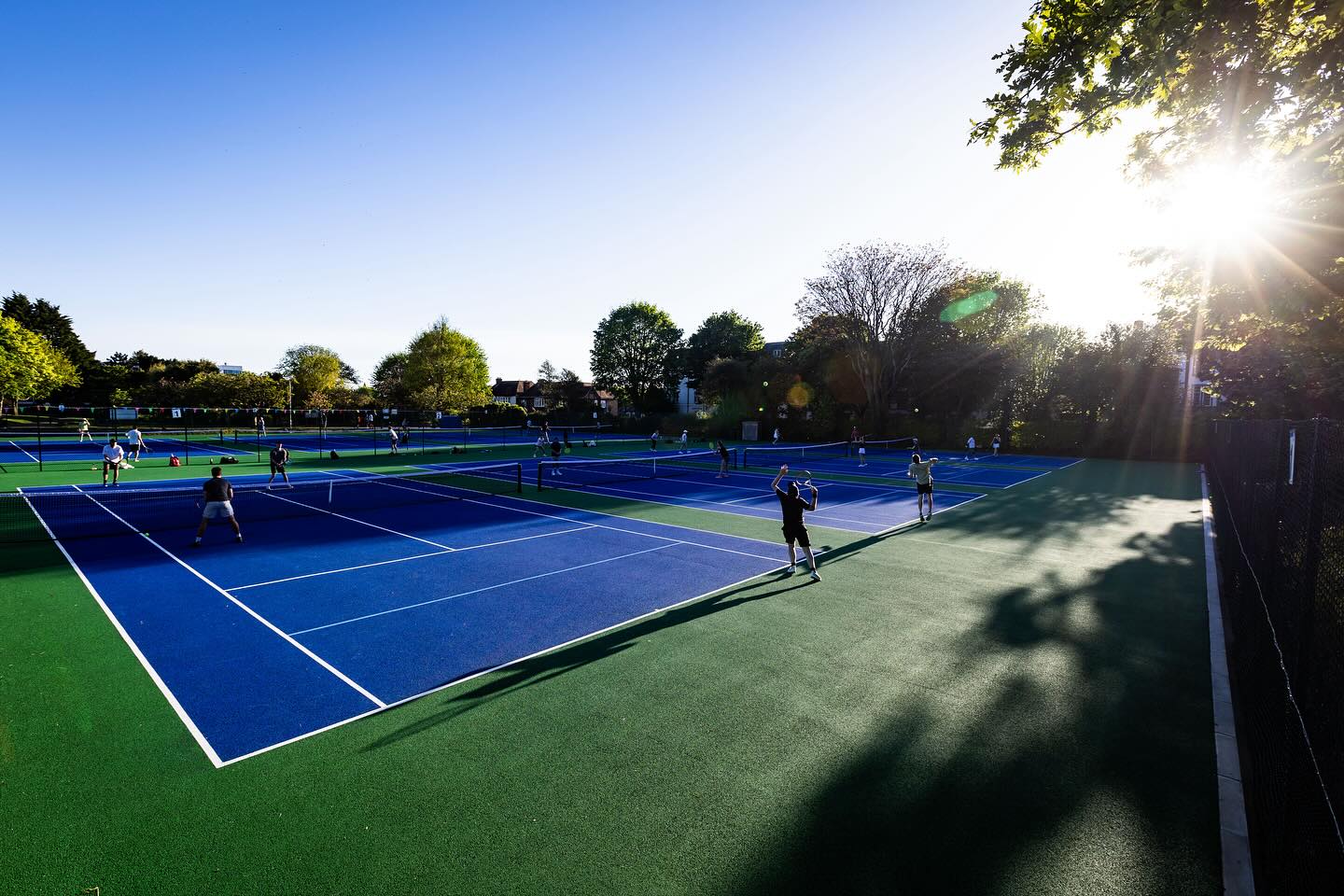
Tennis court construction costs can vary considerably from one project to another.
That is because the final price is determined by much more than the size of the court or the surface you choose. Ground conditions, existing levels, excavation, drainage, access for machinery, fencing, floodlighting and the overall specification can all affect the amount of work required.
Two finished courts may look very similar but have involved very different construction work underneath and around them.
For more than 40 years, Sovereign Sports has constructed courts for private homes, schools, clubs and councils. We provide no-obligation site visits so that we can assess the proposed location, understand how the court will be used and identify the work involved before providing a quotation.
If you are trying to establish a realistic budget, these are the factors that can make the biggest difference.
1. What is the proposed site actually like?
The first question is not which surface you want. It is what we are starting with.
A relatively clear and accessible piece of land may require much less preparation than a site containing heavy vegetation, existing structures, unsuitable material or other obstacles.
The ground also needs to be suitable for creating a stable court construction. The finished playing surface is only the uppermost part of the facility. Much of the important work happens before that surface is installed.
This is why a contractor needs to consider the entire site rather than simply calculate a price from the dimensions of the proposed court.
If you are at the early planning stage, our tennis court construction service explains more about how Sovereign Sports approaches new court projects.
2. Levels, excavation and ground preparation
Existing levels can have a significant impact on tennis court construction costs.
A court needs carefully controlled levels, so a sloping or uneven site can require more extensive groundwork before construction begins.
Depending on the site, this can include excavation, moving material around the property, removing surplus material and bringing in additional construction materials.
Where there are substantial changes in level, additional works may also be needed around the court.
This is one of the reasons generic online cost estimates have their limits. A photograph or simple measurement will not always reveal how much work is required to create the correct formation.
It also explains why two contractors may produce different quotations if they have allowed for different amounts of preparation or different construction specifications.
The important comparison is not simply how much excavation has been priced. It is whether the proposed groundwork is appropriate for the site and the finished court.
3. How easy is access for machinery and materials?
Access is easy to underestimate when planning a private tennis court.
Court construction involves machinery, construction materials and, in many cases, the removal of excavated material.
A site with straightforward access from the road is very different from a court proposed at the bottom of a large garden with a narrow gateway or restricted route.
Difficult access does not necessarily prevent construction, but it can affect how the work has to be carried out.
Smaller machinery may be required. Materials may need additional handling. Deliveries and removal of spoil can become more complicated.
All of this can affect the time and work involved.
If you are deciding between different possible positions for a court, it is therefore worth considering how the construction team will reach the site, not just where the finished court will look best.
4. What drainage will the court require?
Drainage is a fundamental part of outdoor court construction.
The appropriate solution depends on the individual site, ground conditions, levels and overall court specification.
For anyone comparing tennis court quotations, it is worth checking exactly what drainage work has been included.
A lower quotation may not necessarily represent the same scope of work. One contractor may have allowed for a different drainage specification, or for work another quotation has excluded.
This is a recurring theme when comparing court costs. The parts of the facility that are least visible when the project is finished can be some of the most important.
Proper preparation, construction and drainage all contribute to how successfully the court performs over time.
5. Which tennis court surface should you choose?
Surface choice is one of the more visible factors affecting cost, but price should not be the only consideration.
Different tennis court surfaces have different playing characteristics, maintenance requirements and suitability for particular types of use.
Sovereign Sports installs a range of tennis court surfaces for private courts, clubs, schools and other sports facilities.
The right choice depends on how the court will actually be used.
A homeowner may prioritise appearance, playing characteristics and manageable maintenance. A school may need a robust surface suitable for frequent use or multiple sports. A tennis club may have different expectations around performance and member use.
The most suitable surface is therefore the one that matches the requirements of the facility, rather than automatically the cheapest or most expensive option.
When comparing quotations, make sure the exact surface system is clear. Two contractors describing a proposal simply as a “tennis court surface” may not be allowing for the same specification.
6. Court dimensions and overall specification
The overall size and intended use of the facility will also influence the quotation.
The marked tennis court is only part of the required area. Appropriate run-back and side spaces need to be considered, along with fencing, access and any surrounding works.
Requirements may differ between a domestic court and facilities being created for a school, club or public setting.
If several contractors are pricing a project, check that each quotation relates to the same overall dimensions and intended use.
A price difference is much less meaningful if the contractors are actually proposing different facilities.
7. What fencing is included?
Fencing should also be compared on specification rather than simply on whether it appears on the quotation.
Sovereign Sports provides tennis court fencing with different heights, gates and configurations available depending on the facility.
The appropriate solution can depend on the intended sport, surrounding environment, level of use and access requirements.
A private garden court may have very different priorities from a busy school or club facility.
When reviewing a quotation, check the fencing height, type and number of gates rather than relying on a single line saying that fencing is included.
8. Will the court have floodlighting?
Floodlighting can significantly extend the usable hours of a tennis court, particularly through autumn and winter.
It also adds another part to the construction specification.
Depending on the system, installation can involve columns, luminaires, cabling, electrical connections and associated groundwork.
Sovereign Sports installs both static and retractable tennis court floodlighting, so lighting can be considered as part of the wider project.
Planning requirements should also be considered where relevant, particularly for installations involving floodlight columns. The exact requirements will depend on the site and proposed specification.
Even if you are considering adding floodlighting at a later date, it is worth discussing those plans during the initial construction stage. Future requirements may affect decisions made while the main court is being built.
9. Are there additional works around the court?
The wider project can sometimes involve more than the playing facility itself.
Depending on the site, work may also include retaining walls, paths, landscaping or other associated construction.
For a private home, the objective may be to integrate the finished court successfully into the surrounding garden.
A school, club or council facility may have different practical requirements around access and the areas surrounding the court.
These elements should be identified early wherever possible, because they affect the real project scope.
This is another reason why a headline cost for “a tennis court” does not always provide a useful comparison.
Why can two tennis court quotations be so different?
If you receive two or three quotations with noticeably different totals, the most useful question is not immediately, “Why is one contractor more expensive?”
First ask whether they are quoting for the same thing.
One proposal may include more excavation, removal of surplus material, a different drainage solution, a higher fencing specification or additional associated works.
Another may exclude some of those elements or leave them to be agreed and priced later.
The headline total only becomes meaningful once you understand what is included behind it.
A detailed quotation should therefore make the specification clear enough for you to compare contractors on a like-for-like basis.
A tennis court quotation checklist
Before choosing between quotations, check the following:
- Site preparation: What clearance, excavation and preparation work is included?
- Levels: Has the existing slope and condition of the site been properly considered?
- Excavated material: Does the quotation include removal from site where required?
- Access: Have restrictions affecting machinery and deliveries been allowed for?
- Court dimensions: Are all contractors pricing the same overall area?
- Construction: What is proposed underneath the finished playing surface?
- Drainage: What drainage provision is included?
- Playing surface: Is the exact surface system identified?
- Fencing: What type, height and number of gates are included?
- Floodlighting: If required, what lighting and installation work is included?
- Court equipment: Are posts, net fittings and associated equipment included?
- Finishing: Are line marking and final surfacing included within the price?
- Additional works: Are paths, landscaping, retaining works or other items required?
- VAT: Is it clear whether VAT is included?
- Guarantee: What guarantee applies to the completed installation?
- Exclusions: What will still need to be organised or paid for separately?
This exercise is more useful than simply placing three final prices next to one another.
If something is unclear, ask the contractor to explain it before making a decision.
Why does a site visit give you a more useful quotation?
A site visit turns a broad discussion about tennis court prices into an assessment of your actual project.
It allows the contractor to look at access, existing ground conditions and levels, discuss how you intend to use the court and identify any factors that may affect construction.
It can also highlight choices that are difficult to make from a price list alone.
A different position on the property may prove more practical. One playing surface may suit your requirements better than another. Additional work may be easier to incorporate during the main construction rather than adding it later.
At Sovereign Sports, we offer a no-obligation site visit so that these factors can be considered before a detailed quotation is prepared.
Our courts are constructed in accordance with relevant SAPCA and Lawn Tennis Association standards, giving customers a clear specification behind the finished facility.
So, what determines the cost of building a tennis court?
There is no single tennis court construction cost that will be accurate for every project.
The most reliable budget comes from understanding both the site and the specification.
Ground conditions, levels, excavation, drainage and access influence what is required to construct the facility. Surface choice, fencing, floodlighting and associated works then determine what the finished court will include.
That is why two tennis courts of similar size can legitimately have different prices.
If you are considering a new court for a private home, school, club or other sports facility, contact Sovereign Sports to discuss your plans and arrange a no-obligation site visit and quotation.
